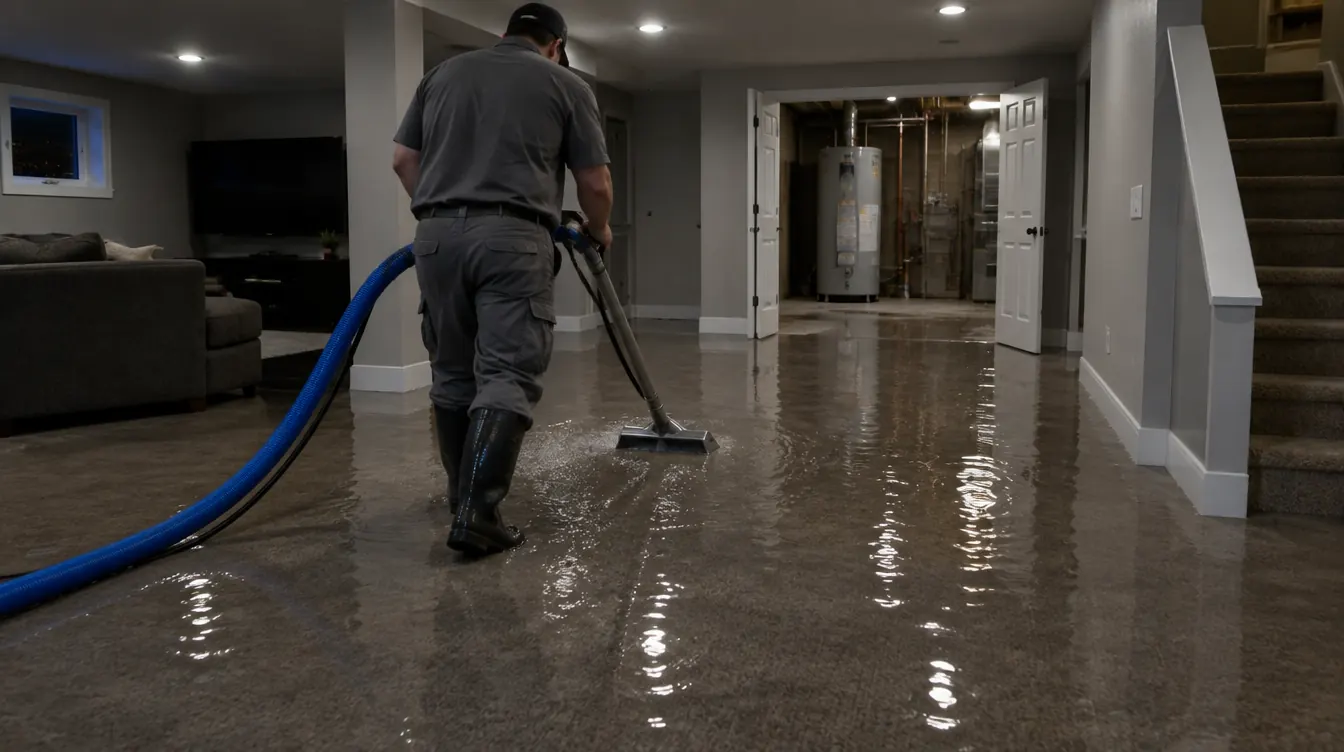
Emergency water removal Denver homeowners need doesn't wait for business hours. A supply line lets go at 11 p.m., the water heater splits on a Sunday, a February cold snap bursts a pipe in the wall, or the floor drain backs up during a summer cloudburst. If there is standing water in your house right now, the priority tonight is simple: stop the source, stay safe, and get the water extracted before it wicks into drywall, cabinets, and subfloor. Call (720) 637-1978, say where the water is and how deep, and get connected with an independent local crew equipped for emergency extraction.
Shut off the main if you can, stay clear of outlets, and call. Describe where the water is and how deep.
Call (720) 637-1978 NowDo These Things Before the Crew Arrives
You can shrink the damage a lot in the next ten minutes:
- Shut off the water. Find the main shutoff — in many Denver homes it sits in the basement where the line comes through the foundation wall, often near the water meter or water heater. For a single fixture, close its supply valve.
- Watch the electricity. Don't walk through water near outlets, appliances, or extension cords. If you can reach the breaker panel without standing in water, shut off power to the wet area. If you can't, leave it and wait outside the room.
- If it's sewage, stay out. Toilet overflows and floor drain backups are contaminated. Keep kids and pets away and don't try to mop it.
- Move what you can. Lift rugs, electronics, boxes, and anything on the floor. Get furniture onto blocks or foil.
- Take photos and video. Before anything moves, for insurance.
Don't start pulling up carpet or tearing out drywall yourself tonight. Removing the wrong material can make the repair bigger.
Flooded Basement in Denver? What Usually Caused It
Basements take the worst of it here. The common emergency calls:
- Burst pipes after a cold snap. Lines in exterior walls and crawl spaces freeze; the leak shows up when they thaw.
- Water heater failure. Tanks in basement utility rooms rust through and release their whole volume, sometimes slowly, sometimes all at once.
- Sump pump failure. A dead pump or a power outage during a heavy storm leaves groundwater with nowhere to go.
- Sewer backups. Older homes in Park Hill, the Highlands, and Washington Park often still have aging clay sewer laterals where tree roots and grease cause blockages that back up through the lowest drain.
- Window wells filling. A summer cloudburst or hailstorm overwhelms a clogged window well drain and the glass gives way.
- Washing machine hoses and toilet supply lines. Small parts, big floods.
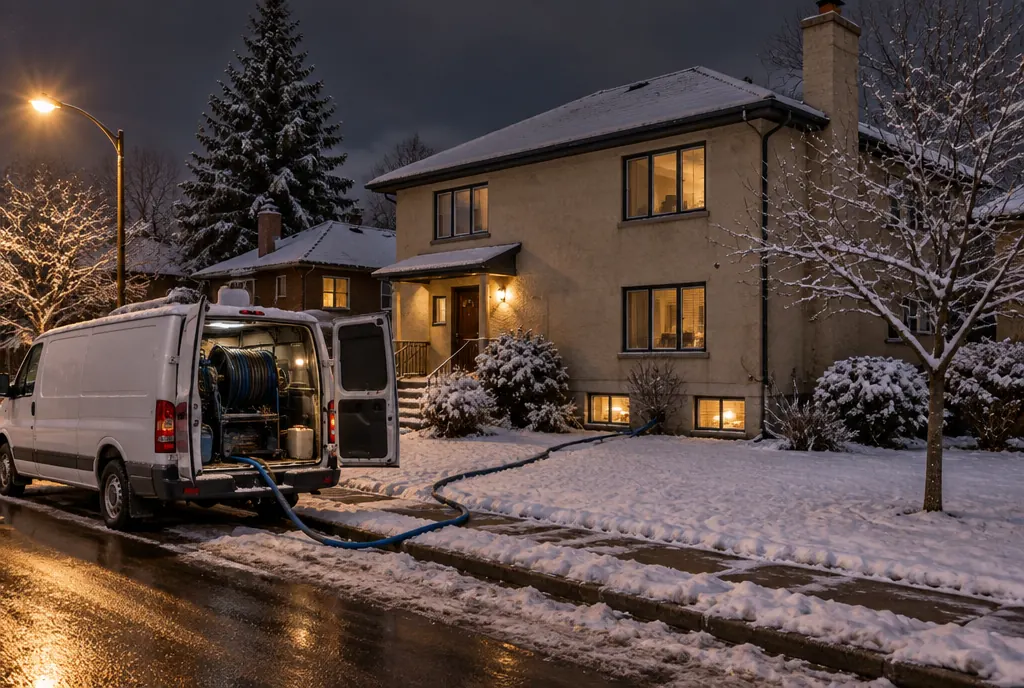
Extraction pulls out far more water than fans ever will. Get connected with a local crew and ask how soon they can start.
Call (720) 637-1978 NowWater Extraction in Denver — What the First Visit Looks Like
An emergency crew's first visit is about stabilizing the house, not finishing the job:
- Safety check for electrical hazards, sagging ceilings, and contamination.
- Source confirmed off, or a plumber called if the leak can't be isolated.
- Extraction with truck-mounted or portable extractors, pulling water out of carpet and pad, off hard floors, and out of low spots and thresholds. Extraction removes far more water than any amount of fans.
- Quick moisture check of adjoining walls and the floor below to see how far it spread.
- Initial drying setup — air movers and dehumidifiers placed so drying can start right away.
From there the job becomes water damage remediation: days of measured drying, decisions about what to remove, and planning the repairs. That's a different phase with different questions; this page is about the first few hours.
Sewer Backup Cleanup in Denver
A sewer backup is not a clean-water job. Under the IICRC S500 standard it's Category 3, which means porous materials it touched — carpet, pad, the bottom of drywall — generally come out, and the area is cleaned and sanitized before drying. Crews wear protective gear for a reason. Don't run the washing machine, flush toilets, or use sinks in the house until the line is cleared, or you'll add to the water in the basement. Tell the person on the call it's sewage so the right crew and equipment come out.
24 Hour Water Removal — What to Say on the Call
This line connects you with independent local crews; it isn't a restoration company itself. You'll get help faster if you can answer:
- Where is the water, and roughly how deep?
- Is the source stopped?
- Is it clean water, appliance water, or sewage?
- How long has it been there?
- Is anyone in the house at risk — power still on in the wet area, ceiling sagging?
Once a crew is on the way, ask them for proof of insurance and whether they follow the IICRC S500 water damage standard. If the water has already been sitting and something smells musty, mention that too — mold can follow wet materials within a day or two. The Denver mold removal overview explains how water and mold work connect.
Water keeps moving while you wait. Call (720) 637-1978 now, describe what's on the floor, and ask how soon extraction can start.
That's contaminated water — keep everyone out of it. Say it's a sewer backup on the call so the right crew comes.
Call (720) 637-1978 Now