Mold remediation cost Denver homeowners pay comes down to scope: how much material has to come out, where it is in the house, and how much containment the job needs. A patch behind a bathroom vanity and a finished basement soaked by months of seepage are not the same project, even if both get called "mold." The figures below come from published sources: a national cost guide from HomeAdvisor and a Denver home-inspection company's posted testing price. You'll go into the conversation knowing the ballpark. Then call (720) 637-1978, describe what you're dealing with, and get a real number from an independent local pro.
Scope drives cost — how much material comes out and how much containment it takes. Describe yours and get a range for your actual job.
Call (720) 637-1978 NowDenver Mold Remediation Prices at a Glance
| Service | Published range | Where the figure comes from |
|---|---|---|
| Typical professional remediation job | $1,223–$3,757 (average about $2,368) | National cost guide (HomeAdvisor) |
| Remediation priced by area | $10–$25 per sq ft | National cost guide (HomeAdvisor) |
| Bathroom | $500–$1,000 | National cost guide (HomeAdvisor) |
| Basement | $500–$3,000 | National cost guide (HomeAdvisor) |
| Crawl space | $500–$2,000 | National cost guide (HomeAdvisor) |
| Attic | $1,000–$4,000 | National cost guide (HomeAdvisor) |
| Inside walls | $1,000–$20,000 | National cost guide (HomeAdvisor) |
| HVAC system | $3,000–$10,000 | National cost guide (HomeAdvisor) |
| Whole house | $10,000–$30,000 | National cost guide (HomeAdvisor) |
| Professional mold inspection | $303–$1,075 (average about $689) | National cost guide (HomeAdvisor) |
| Basic air testing in Denver | $325–$500 | Denver home-inspection company's published price |
| Lab analysis, air sample | $250–$350 | National cost guide (HomeAdvisor) |
| Lab analysis, swab sample | $200–$300 | National cost guide (HomeAdvisor) |
| DIY gear for a patch of about 10 sq ft | $50–$300 | National cost guide (HomeAdvisor) |
Treat these as planning figures, not quotes. Every pro reached through this line is an independent business that prices its own work after hearing about or seeing the job.
What Drives Mold Removal Cost in Denver
The same handful of factors set the price on almost every job:
- Square footage of affected material. The wet area is usually bigger than the visible stain, which is why per-square-foot pricing only gets firm after moisture mapping.
- Access. An open basement wall is straightforward. A low crawl space under a 1950s ranch, or attic sheathing under a shallow roof pitch, is slow, cramped work, and that shows up in the bill.
- Containment level. Small jobs may need only plastic sheeting. Larger ones add negative air with HEPA filtration so spores stay out of the rest of the house and the furnace return.
- What comes out. Drywall, insulation, and carpet pad usually get cut out and bagged. Framing and joists are usually cleaned and treated in place.
- The water source. A plumber's repair, a roofer fixing ice-dam damage, or regrading near a window well are separate costs from the mold work, and the mold comes back if they're skipped.
- Rebuild. Many remediation quotes stop at the bare studs. Ask whether new drywall, paint, and flooring are included or billed separately.
Basement Mold Removal Cost
Basements are where many Denver jobs happen, and the finished ones cost the most to fix. When framing sits against an older foundation wall, seepage tends to soak the bottom foot or two of drywall and insulation along a whole run. Crews often cut a straight line above the wet zone and replace everything below it. An unfinished basement with growth on exposed joists usually runs lower, because there's less to tear out. The Denver mold remediation page explains how containment and removal are sequenced on jobs like these.
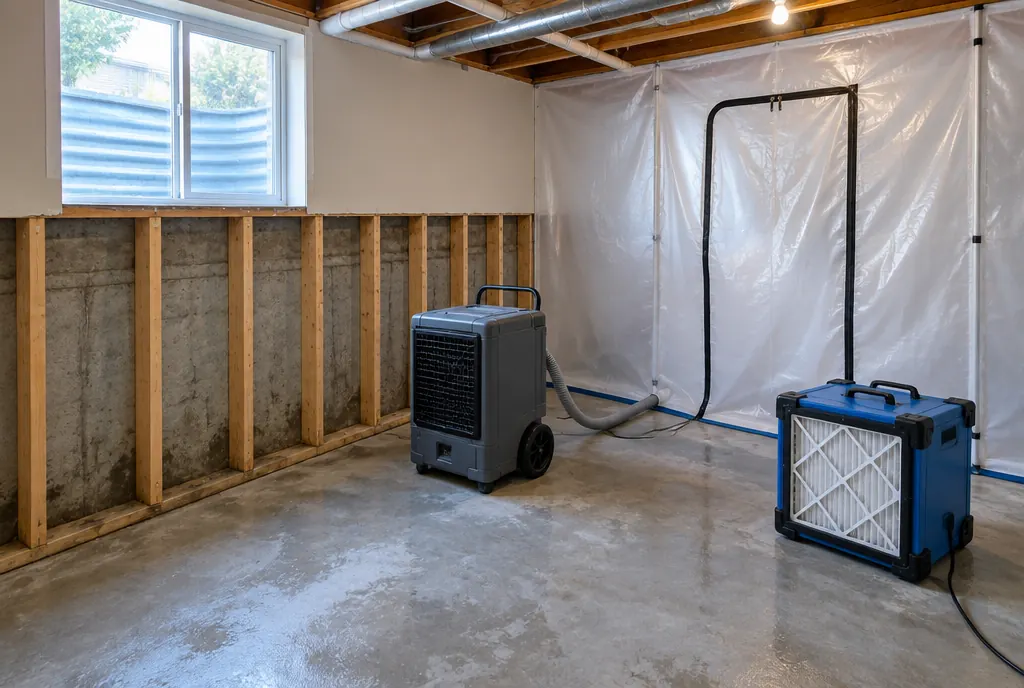
Mold spreads through material week by week. Calling sooner is the most reliable way to keep the job small.
Call (720) 637-1978 NowMold Testing Cost in Denver, and When to Skip It
Testing is a separate line item, and it isn't always needed. The EPA's guidance is that sampling is usually unnecessary when growth is clearly visible, because it has to come out regardless of type. Sampling is worth the money for hidden-source questions, real estate documentation, and clearance after the work is done. Most of a testing bill is lab fees per sample, so ask how many samples are planned and what each one will answer. The mold testing page covers air, swab, and tape-lift sampling in detail.
Does Homeowners Insurance Cover Mold in Colorado?
It depends on the cause and the policy. Mold that follows a sudden, accidental event, like a burst pipe during a cold snap or a failed water heater, is more likely to be considered under the related water claim. Mold from long-term seepage, slow leaks, or humidity is commonly excluded, and many policies cap mold coverage. Read your policy's mold section before assuming either way. Photograph the damage before anything is removed, keep the plumber's or roofer's report showing the cause, and ask the crew for moisture readings and drying records.
Getting a Straight Number for Your Job
A clear description gets you a better answer than any chart. Have ready the room or rooms involved, a rough size of the affected area, how long the leak may have been going on, whether the space is finished, and whether you have test results. This is a free call-connection service, not a contractor. The pros who answer are independent local businesses you hire directly. Compare what you hear against the ranges above, and see the full lineup of services on the Denver mold removal home page.
Ready to trade a range for a real number? Call (720) 637-1978 and describe the job.
It usually turns on the cause — burst pipe or slow seepage. Say what happened and get a straight read on how claims like yours tend to go.
Call (720) 637-1978 Now