Mold testing Denver homeowners pay for is only useful when it answers a specific question. Is that musty smell in the garden-level bedroom coming from inside the walls? Did spores from a known basement problem drift upstairs? Is the house actually clean after remediation? A sample sent to a lab can settle questions like those. It can't replace finding the water, and it's often not needed at all when the growth is plainly visible. If you know what you need to prove, call (720) 637-1978, explain the situation, and get connected with an independent local pro who does sampling in the Denver metro.
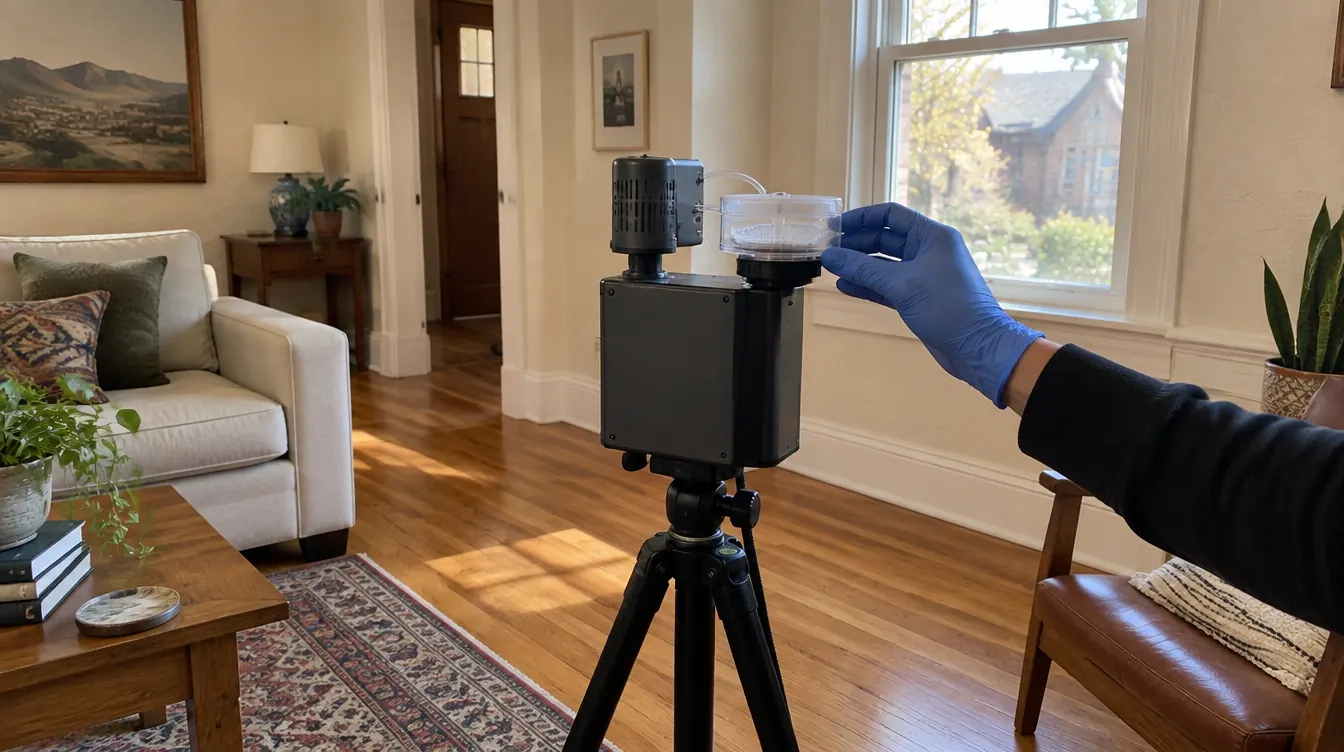
Air and surface samples go to a lab and come back with numbers you can act on. Call and say what you need the results for.
Call (720) 637-1978 NowMold Sampling Methods in Denver: Air, Swab, and Tape Lift
Each sample type answers a different question, and a good tester chooses based on what you're trying to learn, not on what bills the most.
- Air sampling (spore trap). A calibrated pump pulls a measured volume of air through a cassette that traps airborne spores. Indoor results are compared against an outdoor control taken during the same visit. In Denver, that outdoor baseline matters: outdoor counts change with the season, wind, and how recently it rained or snowed. Air samples help answer "is something in this room that isn't outside?" and "did the problem spread?"
- Swab samples. A sterile swab is rubbed across a suspect stain to identify what's growing on that specific surface. It's useful when you can't tell mold from soot, dirt, or efflorescence on a foundation wall.
- Tape lifts. Clear tape is pressed onto the surface and mounted on a slide for the lab to examine under a microscope. It's fast, it's inexpensive, and it works well for a single visible spot.
- Bulk samples. A small piece of drywall, carpet, or insulation is cut out and sent in. This is less common, but sometimes helpful when material in a finished basement has to be checked before it's kept.
An air test for mold works best with the house in normal conditions. Ask the tester whether windows should stay closed beforehand, whether the furnace or swamp cooler should run, and whether to skip vacuuming that morning. Those details change what the pump collects.
What Lab Mold Testing Tells You, and What It Doesn't
Samples go to an outside laboratory. Ask whether the lab is accredited through the AIHA's environmental microbiology program, and ask for the chain-of-custody record that tracks each cassette. You'll get spore counts or identifications by sample location. What the numbers mean still takes interpretation.
The EPA notes that no federal limits exist for indoor mold, so there is no pass/fail number a lab can stamp on your house. A useful report compares rooms against each other and against outdoor air, ties the results to the moisture readings taken on site, and says plainly what the findings support. A report that hands you raw counts with no explanation hasn't done its job.
Testing also can't tell you which stud bay holds the colony. High indoor counts point toward a problem area. Finding the actual source is a moisture job, covered on the mold inspection page.
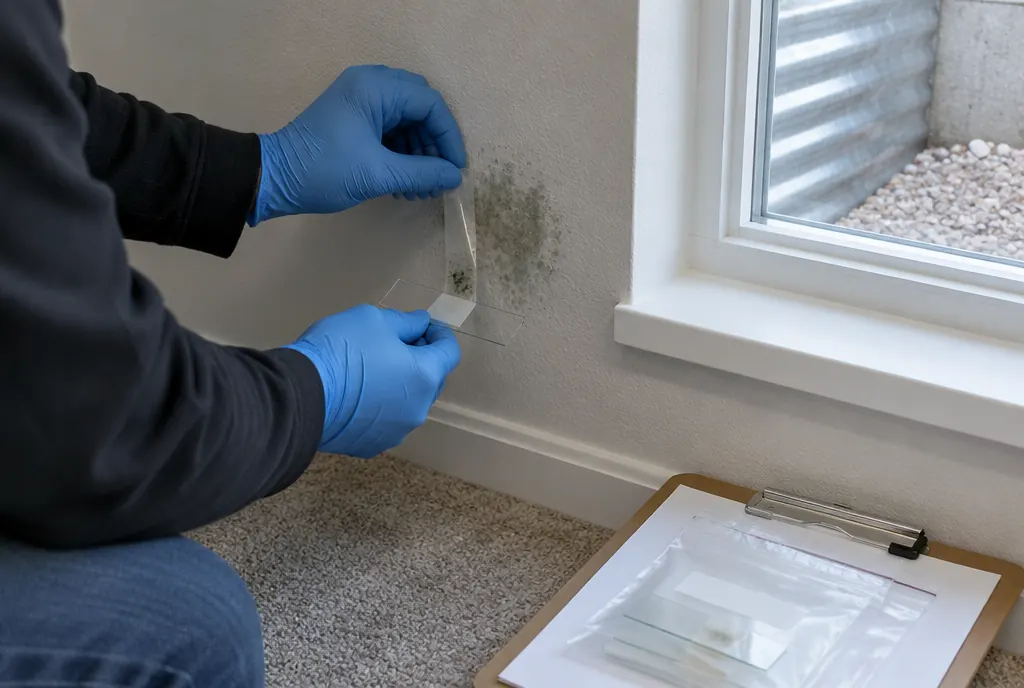
Testing gives you documentation for the conversation. Describe the property and the concern and get pointed to the right sampling.
Call (720) 637-1978 NowWhen Mold Testing Is Worth Paying For in Denver
Sampling earns its fee in a handful of situations:
- A smell with nothing visible. Denver's dry air dries out surfaces fast, which means growth tends to hide inside cavities. Examples include the back of a finished basement wall against an old foundation, or the ceiling under a swamp cooler that dripped all summer.
- Real estate deadlines. A buyer or seller needs written results with sample locations, not an opinion.
- Spread questions. A known problem in one room, and a family member with asthma sleeping in another.
- Clearance after remediation. Air samples taken after the work, ideally by someone who didn't do the removal, confirm the work area is back in line with the rest of the house before walls get closed up.
- Disputes. A landlord, tenant, or insurer wants documentation.
When Testing Isn't Worth It
If you can see mold on drywall under a leaking sink, the EPA's position is that sampling usually isn't necessary. It has to come out regardless of species, and the money is better spent on the fix. Petri-dish kits from the hardware store are a weaker buy still. Spores exist in every home, so a dish left open will almost always grow something, and it tells you nothing about the amount or the source.
The cost of mold testing depends mostly on how many samples the question requires. Published ranges for lab fees and testing visits are on the mold remediation cost page. If the problem is already obvious, the Denver mold removal overview explains what usually comes next.
Questions to Ask Before Anyone Samples
Before you book, ask three things. How many samples does the tester recommend, and what question does each one answer? Will an outdoor control be taken? Will the report explain the results in plain language? Also ask for proof of insurance. These calls usually take a few minutes. Have the address area, the room, and the history of any leaks ready, then call (720) 637-1978 to reach a local pro who can sample.
Post-remediation sampling checks the air before the walls go back up. Ask about it when you call.
Call (720) 637-1978 Now